
Welcome to the University of Oregon's New Media and Culture Certificate (NMCC) Omeka Showcase. NMCC serves as a hub for new media scholarship, research, and activity on the University of Oregon campus. Below you will find a showcase dedicated to exhibiting our students' creative projects and scholarship. All of these were developed with the Omeka web exhibit platform, an open-source resource for scholars looking to develop media-rich exhibits of their researches, archives, and scholarship.
OMEKA SHOWCASE
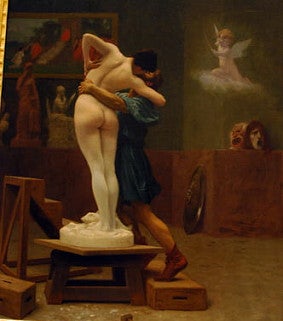
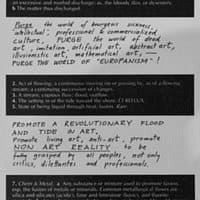
"Make a Shadow": The Performative Arc of Mieko Shiomi's Spatial Poems
By Emily Lawhead, PhD candidate, History of Art and Architecture

FEATURED PROJECTS
Dill Pickle Club
Tessa J. Arnold
This is a case study on the new Dill Pickle Club located in Portland, OR. The organization utilizes the many tools that technology has to offer to generate collaborative place-based programming in the form of themed tours in the city of Portland. Each tour is a unique, one-time event that draws on the expertise of professionals throughout the city.

Ghana Think Tank
Roya Amirsoleymani
On a number of levels, Ghana Think Tank strives to dissolve dichotomies, or disrupt those notions of difference that perpetuate cultural misunderstandings and reinforce hegemonic power structures. By using self-organized citizen think tanks in “developing” nations to propose solutions to problems in “developed” ones, the project helps develop connections between cultural, social, political, and geographical groups that are often presented as inherently different or without points of convergence or intersection, presenting opportunities for intercultural connection and community interaction across false binary oppositions like East/West, first world/third world, religious/non-religious, democracy/theocracy, and old/young. In the context of participatory media, Ghana Think Tank also breaks down a very particular assumed dichotomy: that of real/virtual worlds.
ChinaVine
Nan Young
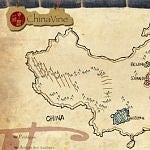
The current mission for ChinaVine is to educate English-speaking / reading children, youth, and adults about China’s cultural heritage. This mission is achieved through it’s interactive website along with a variety of social media platforms.

Fembot Collective
Carol Stabile, Editor
Fembot is a scholarly collaboration promoting research on gender, media, and technology. We envision a new model for open access, multimodal publishing that will provide a prototype for collaborative research, publication, and pedagogy in the humanities and social sciences.
Saving the Sierra
Zachary Schwartz
To examine the question of community mobilization, I have performed a case study on the Saving the Sierra project, and its website Saving the Sierra: Voices of Conservation in Action. The project, led by co-directors Catherine Stifter and Jesikah Maria Ross, engages with the problem of community mobilization by emphasizing collaboration with the community.Project PDF
No More Potlucks
Staci Tucker
No More Potlucks (NMP) serves as a fantastic example of open feminist scholarship, both based on its regional success and regard in the global academic feminist community. NMP is a model of resistance against closed academic scholarship, serving alongside increasingly adopted examples of open access, collaborative, and anti-capitalist projects, founded on queer and feminist ideology.
Games for Change
Ed Parker
Games for Change facilitates the creation and distribution of social impact games, also known as Serious Games, that serve as critical tools in humanitarian and educational efforts (Games for Change, 2011). Games for Change aims to utilize the entertainment and engagement aspects of video games for social good.
Hyde Park Visual History Project
Marissa Laubscher
The Hyde Park Visual History Project, is a project which culminated during the summer of 2009 that collected video footage, images, and audio from individuals and institutions in the community of Hyde Park, NY, and projected them onto the town’s landscape as a forum to create shared experience and dialogue based on memory, identity, heritage, history, and a community’s connection to place.