
An Individual Development Plan (IDP) is a structured tool designed to help graduate students and postdoctoral scholars identify, plan, and track their academic, professional, and personal growth. It serves as a roadmap to help you build skills, set actionable goals, and map out strategies for career success.
The key benefits of developing an IDP include:
- Helping you inventory your strengths and identify any gaps in your knowledge, skill set, or experience.
- Helping you identify the short-term and long-term goals that lead you to action.
- Serving as an indispensable communication tool between you and your faculty advisor.
- Providing a visual representation of how to allocate your time to specific actions and goals.
- Acknowledging milestones achieved along the way, providing a sense of accomplishment, and fostering momentum.
- Documenting your development through assessment and reflection.
When to use an IDP
- All graduate students and postdoctoral scholars are encouraged to use an IDP throughout their study.
- The IDP is a document to be revisited again and again, to update and refine as goals change or come into focus, and to record progress and accomplishments.
- We recommend reviewing your IDP each fall and updating it in the spring in collaboration with your faculty advisor or mentor.
- Some academic programs may require an IDP as part of their annual review process—consult your department for specific guidelines.
- The National Institutes of Health's (NIH) IDP policy requires principal investigators' annual progress reports to include a section on how IDPs are being used to identify and promote the career goals of graduate students and postdoctoral scholars associated with the award.
The National Science Foundation's (NSF) award policy requires funded graduate students and postdoctoral scholars to have IDPs. Principal investigators will need to certify in annual and final reports that grad students and postdocs "receiving substantial support from such award [have] developed and updated annually an individual development plan to map educational goals, career exploration, and professional development."
IDP Resources
The following discipline-specific IDP resources integrate self-assessment into the career planning process.

MyIDP
- Exercises to help you examine your skills, interests, and values.
- A list of 20 scientific career paths with a prediction of which ones best fit your skills and interests.
- Includes a tool for setting strategic goals for the coming year, with optional reminders to keep you on track.
- Provides articles and resources to guide you through the IDP process.
ChemIDP
- Designed specifically for graduate students and postdoctoral scholars in the chemical sciences.
- Immersive, self-paced activities to explore potential careers, determine specific skills needed for success, and develop plans to achieve professional goals.
- Tracks your progress and input, providing tips and strategies to complete goals.
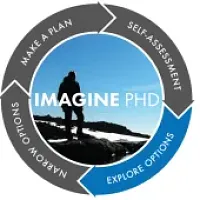
ImaginePhD
- Designed for the humanities and social sciences.
- Assessments to determine your skills, interests, and values.
- Explore 16 job families related to humanities and social science and 500+ career resources.
- "MyPlan" helps you develop a checklist or calendar plan, includes sample goals, and syncs to your Outlook or Apple Calendar.

American Psychological Association IDP
- Guided IDP development.
- Customize your own plan of action.
- Find the best job for you.

PHaSS-IDP
- Designed for graduate students, postdocs, and early career professionals interested in public health and health related careers in the social sciences and some humanities.
- Create and track SMART goals (goals that are Specific, Measurable, Achievable/Action-oriented, Realistic/Relevant, and Time-bound) as a framework for your IDP.